BHD Research Symposium March 2026 Conference Report
2 Jun 2026
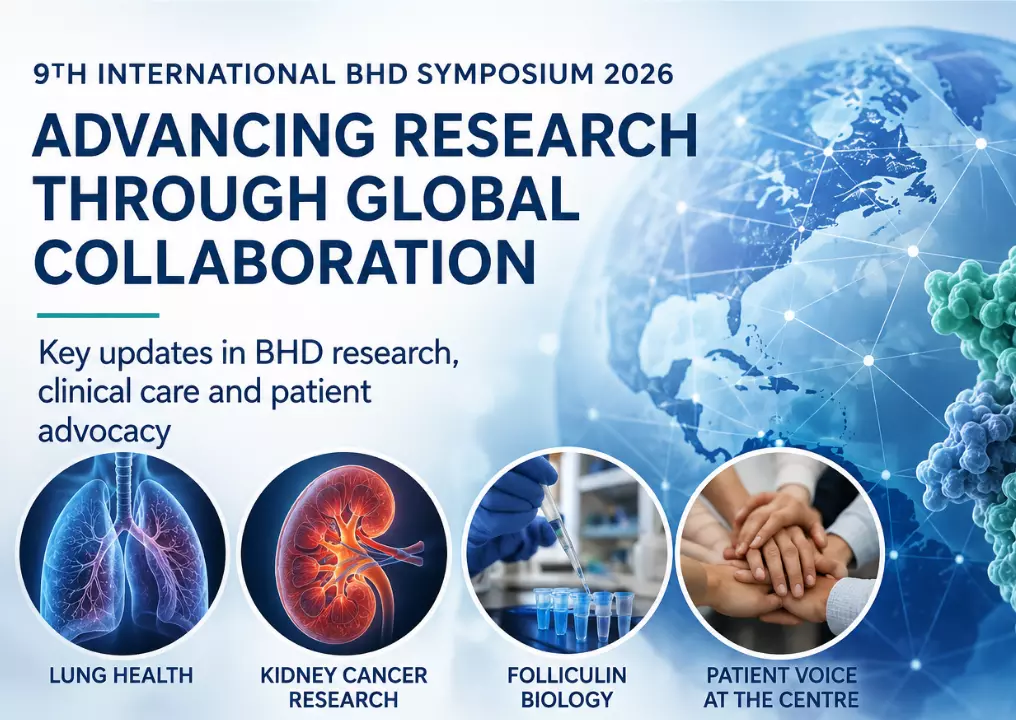
In March 2026, more than 100 researchers, clinicians, and members of the BHD community from around the world came together for the 9th International BHD Symposium. The meeting showcased the latest advances in Birt-Hogg-Dubé (BHD) syndrome research, clinical care, and patient advocacy. Most importantly, it demonstrated how collaboration between scientists, healthcare professionals, and patients continues to drive progress.
Understanding Folliculin: The BHD Gene Protein
One of the major themes of the symposium was improving our understanding of folliculin (FLCN), the protein affected in BHD. Researchers presented new findings about how folliculin works inside cells and how it interacts with other proteins and cellular pathways.
While this research is highly technical, the long-term goal is clear: understanding exactly how BHD develops at a molecular level may help identify new treatment targets in the future. Scientists are making steady progress in uncovering why changes in the FLCN gene can lead to lung cysts, pneumothorax, kidney tumours, and skin manifestations.
New Research Models Are Accelerating Discovery
Researchers shared exciting work using advanced laboratory models to study BHD. These models allow scientists to investigate what happens when folliculin is absent or not functioning correctly.
Improved research models are important because they help researchers test potential therapies more effectively before they move into clinical studies involving patients. Although there are currently no drug treatments specifically approved for BHD, these developments represent important building blocks toward future therapies.
Progress in Kidney Cancer Research
Several presentations focused on understanding how kidney tumours develop and identifying the biological changes that occur in tumour cells.
Researchers discussed emerging technologies that allow them to study tumours in greater detail than ever before. These approaches may eventually help improve diagnosis, surveillance, and treatment strategies for people living with BHD.
Improving Clinical Care
The symposium highlighted advances in clinical care and patient management.
Experts discussed current approaches to surveillance, diagnosis, and monitoring of BHD-related complications. As more data becomes available from international patient cohorts and registries, clinicians are gaining a better understanding of how BHD affects individuals differently and how care can be tailored to each patient.
The importance of early diagnosis was repeatedly emphasised. Many people with BHD remain undiagnosed or are diagnosed only after experiencing multiple pneumothoraxes or discovering kidney tumours. Increased awareness among healthcare professionals remains a key priority.
The Patient Voice Remains Central
One of the most valuable aspects of the symposium was the inclusion of patient experiences. Living with a rare condition can present challenges that extend beyond medical care, including uncertainty, access to specialist services, and the emotional impact of diagnosis.
By bringing together patients, advocates, clinicians, and researchers, the symposium ensured that research priorities remain focused on the issues that matter most to the BHD community.
Looking Ahead
The overall message from the 2026 International BHD Symposium was one of optimism. Researchers are developing a deeper understanding of folliculin biology, improving laboratory models, and expanding international collaboration. At the same time, clinicians are working to improve diagnosis, surveillance, and patient care.
While many questions remain, the pace of BHD research continues to accelerate. Every new discovery brings us closer to better treatments, improved outcomes, and ultimately a better quality of life for people living with BHD.
The BHD community has always been driven by collaboration, and this year's symposium demonstrated just how powerful that collaboration can be.