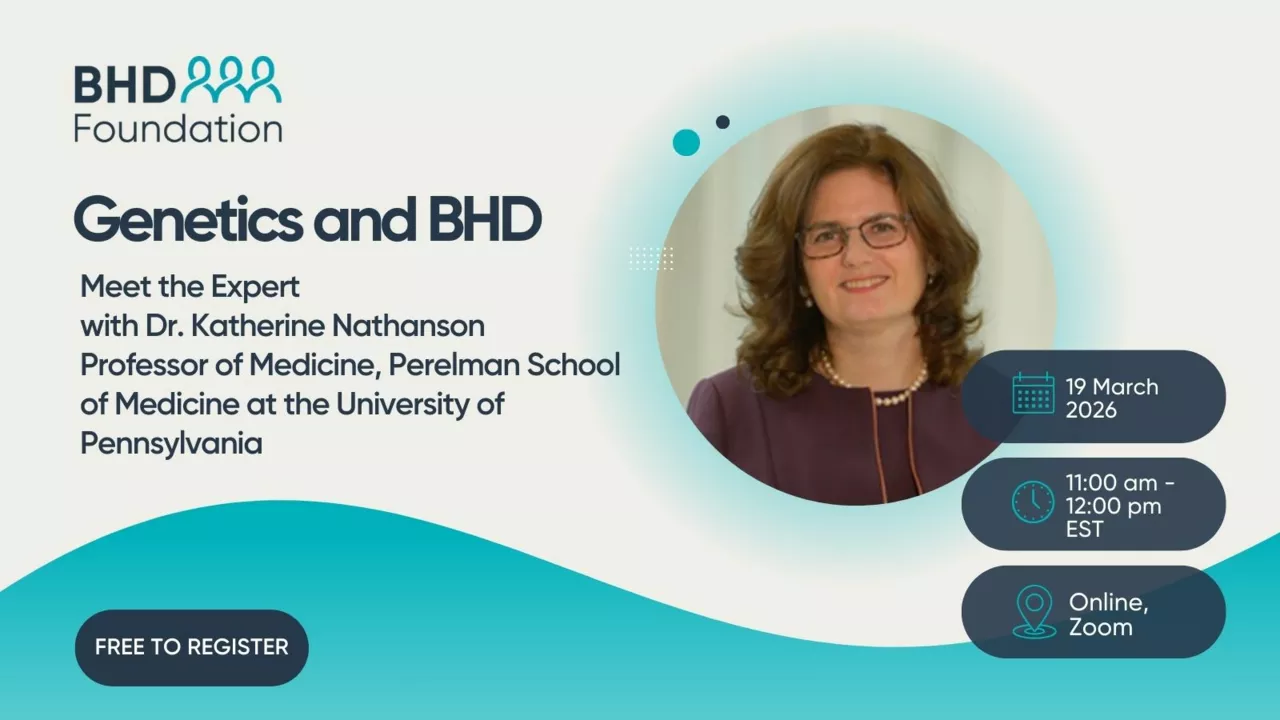
Meet the Expert March 2026
14 Apr 2026
Meet the Expert: Genetics and Birt-Hogg-Dubé Syndrome
The BHD Foundation recently hosted a “Meet the Expert” session featuring Professor Nathanson, a leading specialist in cancer genetics. The session provided an accessible and informative overview of Birt-Hogg-Dubé (BHD) syndrome, with a focus on genetics, diagnosis, and clinical management.
Understanding BHD and Genetics
The session began with a clear explanation of genetics and how inherited conditions like BHD occur. BHD is caused by mutations in the folliculin (FLCN) gene, which plays a role in normal cell function. These mutations are inherited in an autosomal dominant pattern, meaning each child of an affected individual has a 50% chance of inheriting the condition.
Professor Nathanson highlighted the importance of distinguishing between inherited genetic changes and those that occur only within tumours, helping clarify a common area of confusion for patients.
Clinical Features and Diagnosis
BHD is characterised by a combination of:
- Skin lesions known as fibrofolliculomas
- Lung cysts and risk of pneumothorax
- Increased risk of certain kidney tumours
Diagnosis can be made through clinical criteria or confirmed with genetic testing. The session emphasised that BHD is likely underdiagnosed, with emerging data suggesting it may be more common than previously thought.
Management and Monitoring
A key focus of the discussion was how BHD is managed in practice. Recommendations include:
- Regular kidney imaging from early adulthood
- Monitoring for lung complications
- Preventative measures such as avoiding smoking and protecting skin from sun exposure
Early detection and routine surveillance were highlighted as essential to achieving the best outcomes.
Genetic Testing and Family Implications
Genetic testing plays a central role in confirming diagnosis and supporting family members. The session outlined what to expect during a genetics consultation and the importance of testing in guiding long-term care and informing relatives who may also be at risk.
Patient Questions and Key Takeaways
The session concluded with a wide-ranging Q&A, addressing topics such as screening approaches, lifestyle considerations, and areas where evidence is still evolving.
A recurring theme was the importance of balancing awareness with quality of life, ensuring individuals feel informed and supported without unnecessary restriction.
This event reinforced the value of expert-led education for the BHD community, helping patients and families better understand the condition and feel confident in managing it.
The BHD Foundation extends its sincere thanks to Professor Nathanson for sharing her expertise, and to all who participated in this important discussion.
Stay up to date on the latest news and events by signing up to our Newsletter.